Gravitational Waves: astrophysics, source modeling, data analysis, construction of the Virgo detector
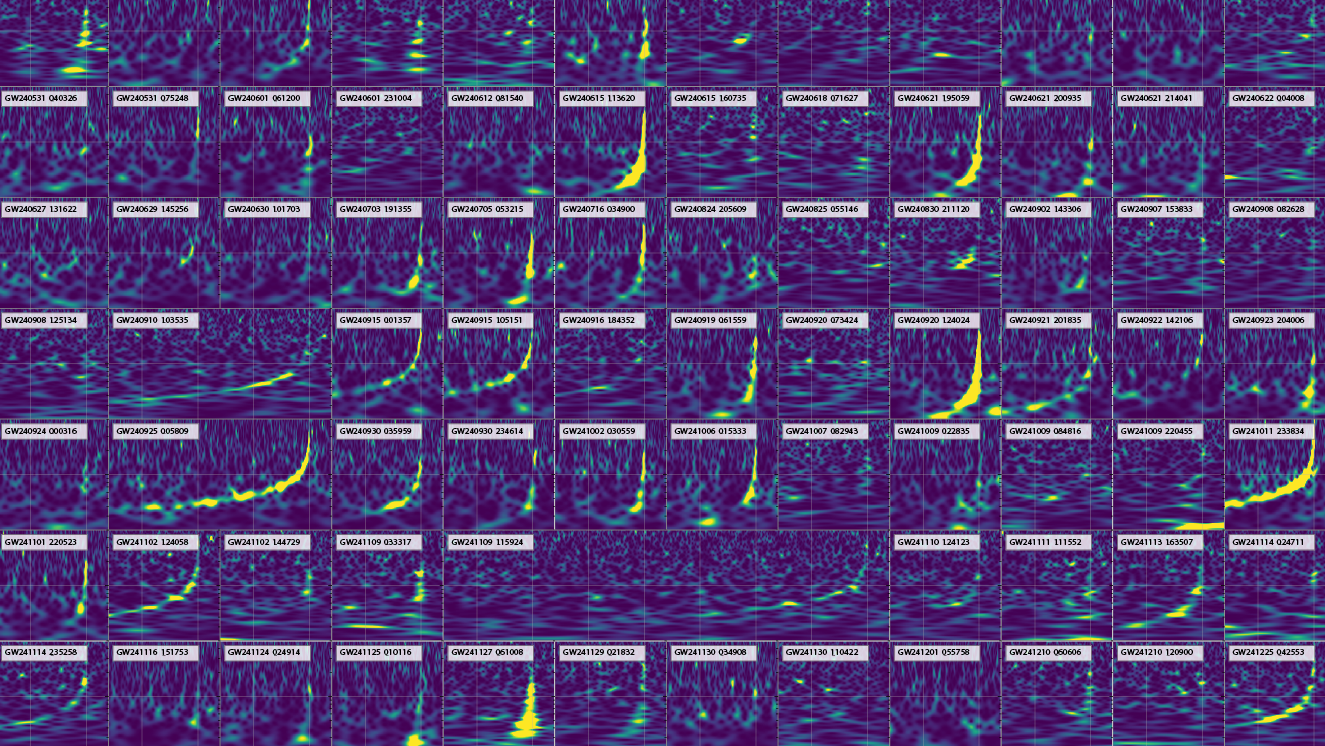
The LIGO–Virgo–KAGRA Collaboration published today a new catalog of gravitational wave events. A total of 161 events, detected between April 2024 and the end of January 2025, have been added to the collection, bringing the total number of gravitational wave signals detected to date to 390. Among the most significant findings are: evidence for the existence of second-generation black holes, the most precise sky localization ever achieved for a gravitational wave source, and the first measurement of three vibrational modes of a black hole.
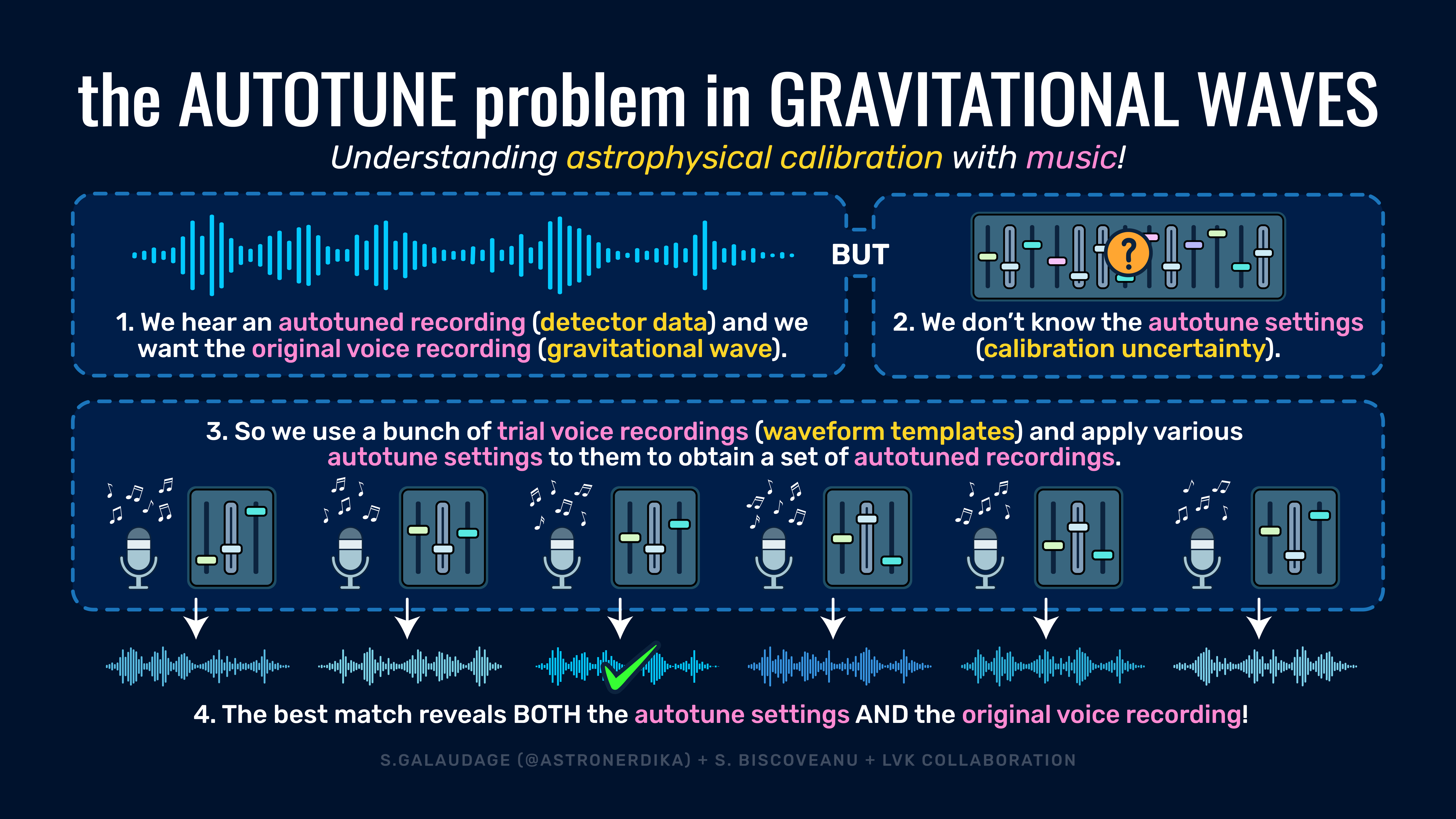
The LIGO–Virgo–KAGRA (LVK) detector network has a new trick up its sleeve to improve the instruments’ sensitivity to gravitational waves: it’s called Astrophysical Calibration and it plays a role similar to auto-tune in music production.
When a gravitational wave passes through the Earth, the LIGO, Virgo and KAGRA detectors are ready to detect it, but their sensitivity depends on many factors and it is possible that one of them may not be operating at full capacity at that moment.
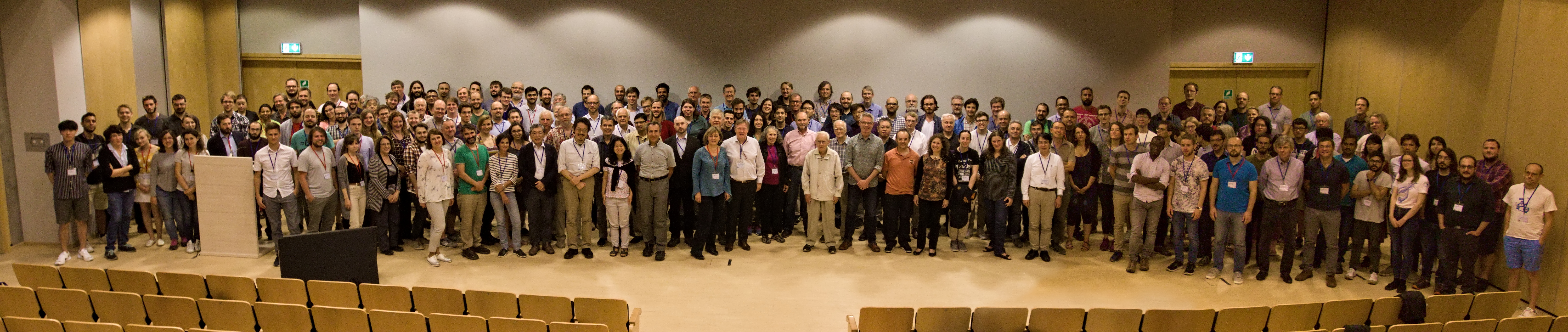
The annual meeting of the LIGO–Virgo–KAGRA (LVK) Collaboration in 2026 was held in Pisa, Italy, in close proximity to the Virgo gravitational-wave observatory, whose 3-kilometre-long interferometric arms make it one of the world’s leading facilities for gravitational-wave detection. The conference took place from 9–13 March 2026 and brought together researchers from across the global gravitational-wave community.
Members of the Polgraw group actively participated in the meeting, contributing to scientific discussions and collaborative activities.
In December 2025 one more institute joined Polgraw: Center for Theoretical Physics of the Polish Academy of Sciences (CTP PAS) in Warsaw. The coordinator on CTP behalf is Dr. hab. Maciej Bilicki, who had been already individually involved in Polgraw and LIGO/Virgo/KAGRA. CTP plans to carry out research in gravitational wave cosmology, in particular by employing the ‘standard sirens’ to measure cosmological parameters.
We welcome CTP PAS in our team!
Dear Colleagues,
It is with deep regret to announce that on February 27, 2026, Professor Andrzej Trautman passed away at the age of 93.
His intellectual courage and mathematical precision made it possible to demonstrate that gravitational waves can exist, and his passing marks the end of an era in theoretical physics. Yet the legacy he leaves behind remains a living foundation of our modern understanding of the Universe. Andrzej Trautman made his mark on the history of science above all by resolving one of Albert Einstein’s greatest dilemmas.
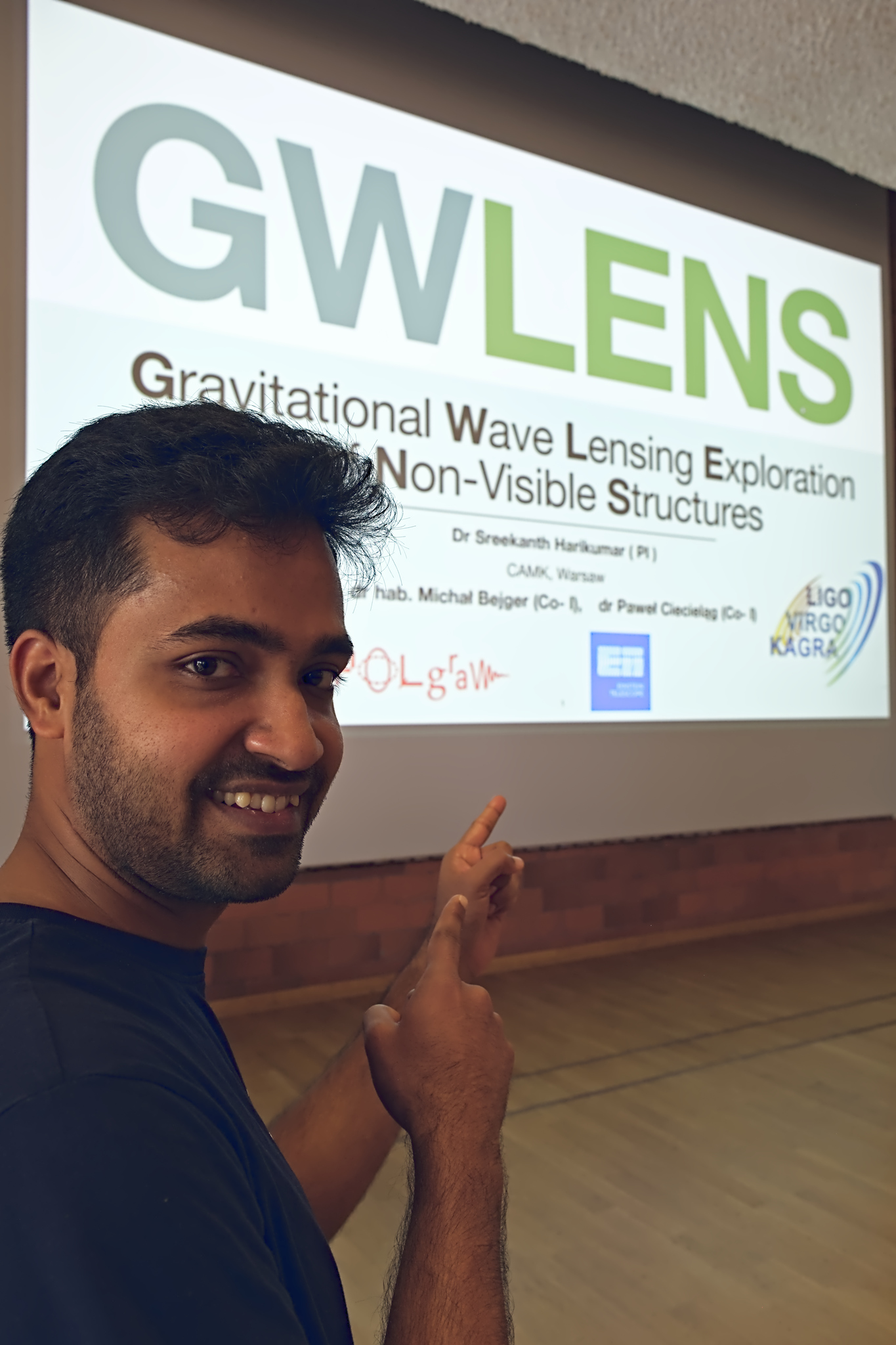
A member of our group from Copernicus Astronomical Center PAN, Sreekanth Harikumar got a NCN Sonatina grant for a project: “Gravitational Wave Lensing Exploration of Non-visible Structures”.
The aim of the project is to use gravitational waves to understand and solve the mysterious nature of dark matter. Galaxies are known to exist in the dark matter halos. To investigate them, the phenomenon of gravitational wave lensing will be employed. When a galaxy happens to lie along the line of sight between our gravitational wave source and the detector, it will result in gravitational wave lensing.